

Summer road trips out of the Lehigh Valley tend to come with their own kind of checklist. The playlist gets built, the snacks get packed, the drinks get loaded into a cooler, and an argument occurs over who rides shotgun first. That is part of the fun. What is much less fun is ending up on the shoulder of I-78 with the hood up and a car full of irritated, overheated passengers.
The good news is that most roadside breakdowns are preventable. Not every issue announces itself ahead of time, but many of the most common culprits do. Tires, cooling systems, batteries, and belts often show warning signs before they fail. Catching those problems before a long drive is a lot easier, and a lot cheaper, than dealing with them halfway to your destination.
This road trip checklist covers 10 areas worth reviewing before any major highway trip. Some are easy enough to look over in your own driveway. Others are better handled by a professional. Either way, knowing what to check helps stack the odds in your favor, so the loudest thing on the drive is your family singing along in the car, not the sound of something going wrong under the hood.
1. Tires
Tires are the one component that never gets a break while the vehicle is moving, and they’re the leading cause of roadside breakdowns. Before a long drive, check four things: tread depth, tire pressure, the condition of the sidewalls, and the spare.
Tread depth should be above 4/32″ at minimum. The old penny test (Lincoln’s head disappearing into the tread) gets you to roughly 2/32″, which is the legal minimum — not an ideal target heading into a multi-hour highway run. A quarter gives a better benchmark; if the top of Washington’s head is visible, you’re at about 4/32″ and worth a closer look. Pressure should match the placard inside the driver’s door jamb, not the max PSI printed on the tire itself. Cold pressure (checked before driving) is the accurate measurement. Sidewalls should show no bubbling, cracking, or cuts. And the spare, if you have one, should be inflated and accessible.
Auto Motors of Lehigh Valley offers tire rotation, inspection, and installation — if you’re not sure where your tires stand before a long drive, it’s worth a quick inspection.

2. Brakes
Squealing during braking means the wear indicators are doing their job — signaling that the pads are getting thin. Grinding is a different issue, and typically means the pads have worn through to the metal backing. Both are worth addressing before a highway trip, not after. For a detailed breakdown of what brake warning signs actually mean, see our guide on recognizing brake problems early.
Beyond noise, pay attention to how the pedal feels. A firm, consistent pedal is normal. A soft or spongy pedal, or one that sinks further than usual, can point to air in the brake lines or a fluid issue. Pulling to one side under braking suggests uneven pad wear or a sticking caliper. Any of those symptoms deserves a look before heading out.
3. Fluids
Five fluids are worth checking before a long drive:
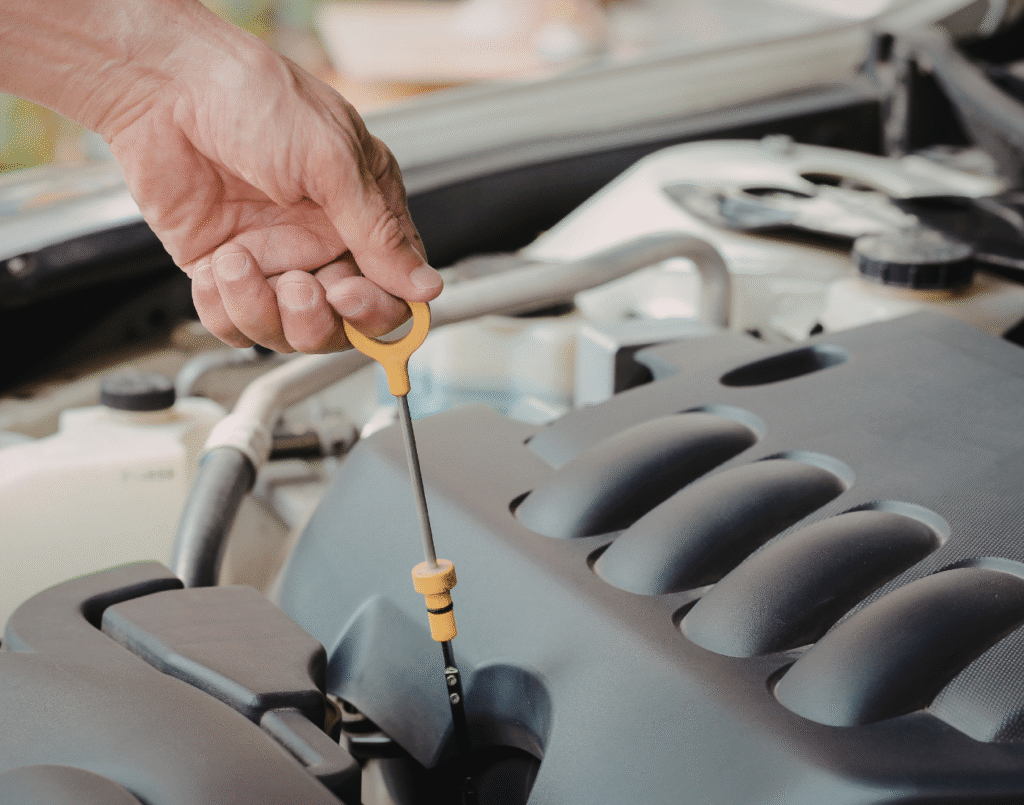
- Engine oil: Check the level and color on the dipstick. Fresh oil is amber; dark black oil is overdue for a change. If you’re within a few thousand miles of your next change interval, handle it before the trip.
- Coolant: The reservoir should sit between MIN and MAX. Coolant is what keeps your engine from overheating on long summer highway runs, and it’s one of the more common causes of roadside breakdowns.
- Brake fluid: Should be clear to light yellow. Dark, murky fluid indicates moisture contamination and reduced performance — especially relevant during hard braking on mountain roads.
- Power steering fluid: Low fluid causes stiff or jerky steering, which becomes more noticeable on long drives with lane changes and curves.
- Windshield washer fluid: Easily overlooked, genuinely annoying to run out of — especially on any stretch of road with road spray or bugs.
4. Belts
The serpentine belt drives your alternator, power steering pump, air conditioning compressor, and other components off the engine. If it fails while driving, multiple systems go offline at once. Check it for cracking, fraying, glazing, or missing chunks. Most serpentine belts are good for 60,000 to 100,000 miles, but heat and age degrade rubber regardless of mileage.
If your vehicle has a timing belt rather than a timing chain, check your owner’s manual for the replacement interval. Timing belt failure in an interference engine can cause significant internal engine damage — it’s the kind of repair that costs considerably more than the belt itself would have.
5. Hoses
Rubber hoses harden, crack, and develop soft spots over time. The two most important ones to check are the upper and lower radiator hoses. With the engine cold, squeeze them — they should feel firm but pliable, not rock-hard or spongy. Look for swelling near the clamps, dried coolant deposits (a white or green residue), or visible cracking. A hose that blows on the highway means pulling over, waiting for the engine to cool, and calling for a tow. Catching it in the driveway is a much easier fix.
Planning a summer road trip and want a professional set of eyes on everything before you go? Our team at Auto Motors of Lehigh Valley can walk through your vehicle’s full condition and tell you exactly what’s ready and what isn’t. Schedule an appointment here.
6. Battery
Heat is harder on car batteries than cold, which surprises some drivers. A battery that barely made it through winter may not last through a summer road trip. Before leaving, look for corrosion buildup around the terminals — a white or bluish-gray crust that can interfere with the connection. Cables should be secure and free of fraying.
Most automotive batteries last three to five years. If yours is approaching that window and you’ve noticed slow starts or flickering electronics, a load test before the trip is a smart move. It’s a quick test that confirms whether the battery can hold up under real-world demand. For more on batteries and when replacement makes sense.

7. Lights
Walk around the vehicle with the lights on and check every bulb: headlights (high and low beam), taillights, brake lights, turn signals, and reverse lights. A burned-out brake light is a safety issue and a moving violation — both of which are avoidable with a two-minute check in the driveway. If you need a second person to help check the brake lights, it’s worth the ask.
Also check the interior lights and dashboard warning lights. If anything is illuminated that you haven’t addressed, have it diagnosed before leaving. A check engine light doesn’t always mean something catastrophic, but it also shouldn’t be ignored for a few hundred miles of highway driving.
8. Wipers
Wiper blades degrade from UV exposure, heat, and general use. A blade that smears, streaks, or skips across the windshield is a problem when you’re driving through a summer storm on the Pennsylvania Turnpike. Replace them if the rubber shows cracking or if they don’t clear the glass cleanly. It’s one of the least expensive items on this list and one of the easiest to take care of in advance.
Also top off the washer fluid (covered in the fluids section), and check that the rear wiper, if your vehicle has one, is also functional.
9. Air Conditioning
Few things make a long drive less enjoyable than an A/C system that blows lukewarm air on a 90-degree afternoon. Before your trip, run the A/C on full for a few minutes and confirm it’s cooling effectively. Weak airflow or warm output can point to low refrigerant, a failing compressor, or a clogged cabin air filter.
The cabin air filter is worth checking on its own. It affects both A/C performance and air quality inside the vehicle. A filter that’s been in service through a full pollen season in the Lehigh Valley is likely ready for a swap. Our routine maintenance services include cabin filter replacement if you’re not sure when yours was last changed.
10. Emergency Kit
Every vehicle making a long highway trip should carry a basic emergency kit. Not because anything is guaranteed to go wrong, but because preparation is what makes an inconvenient situation manageable rather than a genuinely difficult one. A well-stocked kit should include:
- Jumper cables or a portable jump starter
- A tire pressure gauge and a can of inflator/sealant
- Reflective triangles or road flares
- A basic first aid kit
- A flashlight with fresh batteries
- Water and a basic snack supply
- A phone charger or portable power bank
- A copy of your insurance and roadside assistance information

How Far in Advance Should You Schedule an Inspection?
A week to ten days before your trip is the right window. That gives enough time to address anything that comes up — waiting until the day before leaves no room to handle a surprise. Most inspections don’t reveal major issues, but the ones that do are the ones you’re glad you caught early.
A professional pre-trip inspection covers all of the items above, plus a few that are harder to assess without a lift: undercarriage components, exhaust condition, CV axle boots, and brake hardware. If you’re putting significant miles on the vehicle, it’s worth the time.
At Auto Motors of Lehigh Valley, we’ve been helping Lehigh Valley drivers prepare their vehicles for the road since 1992. Whether you’re heading out for the weekend or planning a longer summer trip, our team will give you an honest assessment of what your vehicle needs before you go — and what can wait until you get back.