Summer driving in the Lehigh Valley means heat — the kind that sits in stop-and-go traffic on Route 22, climbs while you’re idling at a red light on Tilghman Street, and pushes your vehicle’s cooling system harder than it works any other time of year. For most drivers, the cooling system is invisible until something goes wrong. When it does go wrong in summer, the consequences of engine overheating tend to be both expensive and inconvenient.
The good news is that engine overheating prevention is largely preventable. Understanding how your coolant system works, what early warning signs look like, and when key components need attention gives you a real advantage. A little awareness and some routine maintenance go a long way toward keeping your engine running at the right temperature through the hottest months of the year.
Here’s what you need to know.
How Your Cooling System Actually Works
Before getting into what goes wrong, it helps to understand what’s supposed to happen. Your vehicle’s cooling system is a closed loop with several interdependent components, each playing a specific role in managing engine temperature.
Coolant absorbs heat as it circulates through the engine. The water pump keeps that coolant moving through the system continuously. The thermostat acts as a valve, monitoring engine temperature and opening to allow coolant flow to the radiator once the engine reaches its operating range. The radiator then transfers heat from the coolant into the surrounding air, and the cooled fluid cycles back through the engine to repeat the process.
The cooling fan, radiator hoses, radiator cap, and overflow reservoir all support this loop. A failure in any one of these components can disrupt the whole system. When the heat generated by combustion can’t escape the engine fast enough, temperatures rise to the point where serious and sometimes permanent damage occurs.
Understanding this chain helps explain why a slow coolant leak, an aging thermostat, or a worn water pump seal are the sort of problems that need to be addressed sooner, rather than later.
The Most Common Causes of Engine Overheating
Most summer overheating events trace back to one of a handful of root causes. Knowing what they are — and what they look like early — is the practical core of prevention.
Low or depleted coolant. Coolant level drops when there’s a leak somewhere in the system — a cracked hose, a corroded radiator, a worn water pump seal, or a deteriorated gasket. Even a minor seep creates a gradual loss that compounds under the additional heat stress of summer driving. Coolant that’s old and broken down also loses its ability to regulate temperature effectively, even at correct levels.
A failing thermostat. When a thermostat sticks in the closed position, coolant can’t flow to the radiator, and the engine temperature climbs rapidly. A thermostat stuck open creates the opposite problem — the engine takes too long to reach operating temperature and runs inefficiently. Either condition warrants replacement.
Water pump failure. The water pump is the mechanical driver of coolant circulation. When its impeller wears down, its bearings fail, or its seals begin to leak, coolant flow is reduced or stops entirely. A failing water pump often announces itself with a whining noise from the engine or a coolant leak near the front of the vehicle. Left unaddressed, a failing water pump can cause engine temperatures to reach dangerous levels.
Clogged or damaged radiator. The radiator’s job is to release heat. Mineral deposits, debris, and rust buildup reduce its efficiency over time. A clogged or internally corroded radiator can’t cool the coolant effectively, even when everything else in the system is functioning.
Cooling fan problems. At highway speeds, airflow through the radiator provides much of the cooling effect. At low speeds and in traffic, the cooling fan takes over. A fan motor that’s failing, a bad fan clutch on a mechanical fan, or a relay or sensor issue on an electric fan means the radiator isn’t getting the airflow it needs during exactly the conditions that create the most heat demand.
Low engine oil. This one surprises some drivers, but engine oil plays a role in heat management beyond lubrication. Oil helps transfer heat away from components that coolant doesn’t directly touch. When oil is low, more friction-generated heat builds up in the engine, adding to the load on the cooling system.
What a Radiator Coolant Flush Actually Does
and When to Do One
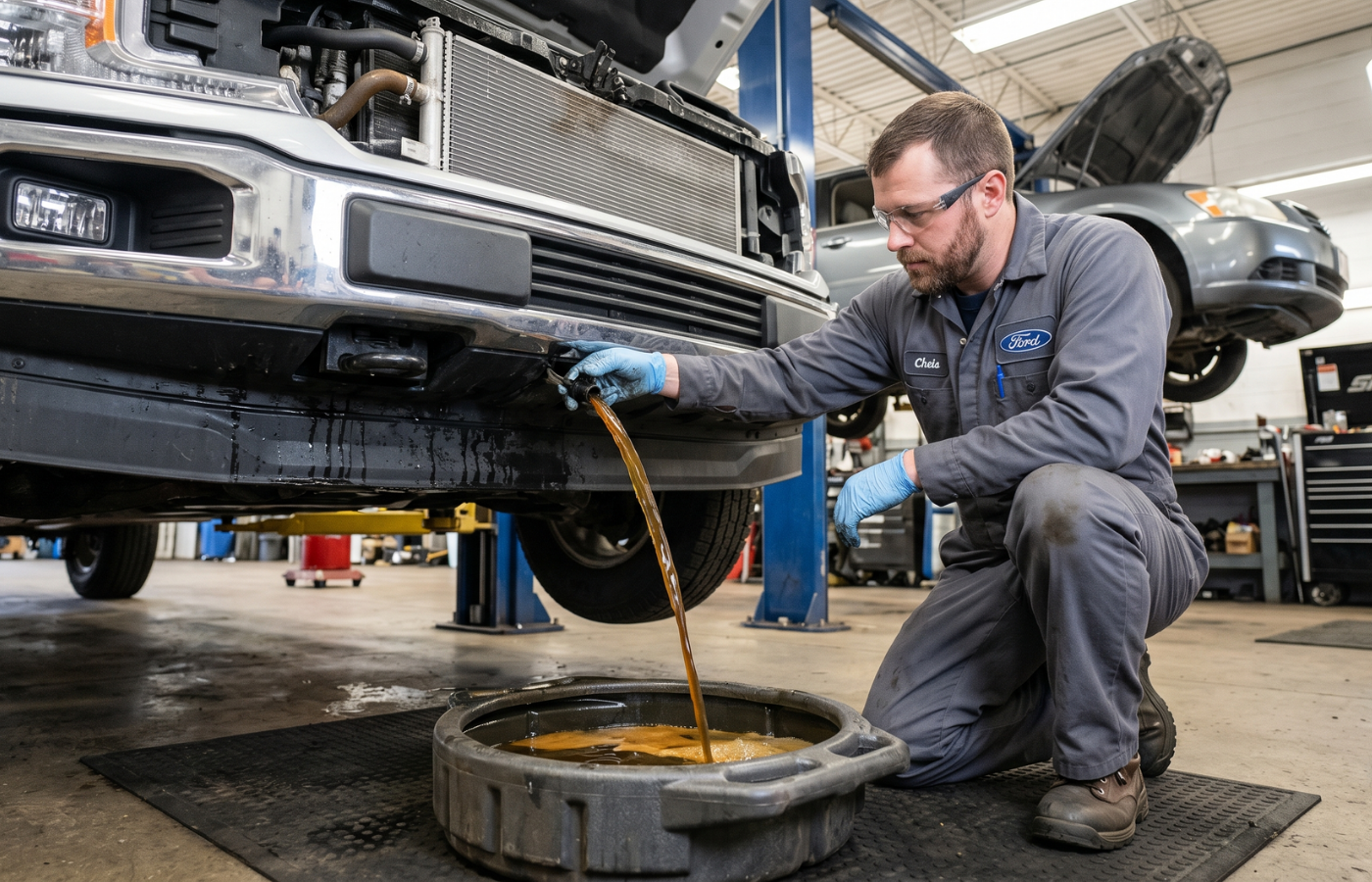
A coolant flush is one of the most straightforward and effective pieces of cooling system maintenance a driver can stay on top of. Over time, the corrosion inhibitors in coolant break down. As they deplete, the coolant becomes acidic and can corrode metal components from the inside — the radiator, heater core, water pump, and engine block passages among them. Old coolant also loses its heat-transfer efficiency and can accumulate debris that restricts flow.
The flush removes the degraded fluid along with any accumulated contaminants, cleans the system, and replaces everything with fresh coolant at the correct mixture ratio. That ratio matters: a properly mixed 50/50 blend of antifreeze and distilled water is the standard for most vehicles in a climate like Pennsylvania’s, though the correct specification for your particular vehicle is worth confirming in the owner’s manual.
Most vehicles have a recommended service interval for changing/flushing coolant from 100,000 to 150,000 miles. The right answer for your vehicle depends on the type of coolant it uses, your driving conditions, and what your manufacturer specifies. A shop that reviews your maintenance history with you — rather than applying a one-size-fits-all interval — will give you the most accurate guidance.
Auto Motors of Lehigh Valley performs cooling system flushes and repairs as part of its routine vehicle maintenance services. The team reviews your vehicle’s specific requirements and takes your driving patterns into account when recommending service intervals.
Concerned about your cooling system heading into summer? Contact Auto Motors of Lehigh Valley to schedule an inspection before the heat peaks.
Warning Signs Your Cooling System Needs Attention
Cooling system issues rarely appear without any warning. Recognizing the signals early — before you’re sitting on the shoulder of 78 with steam coming from under the hood — is where paying attention to your vehicle pays off.
Watch for these indicators:
- Temperature gauge creeping higher than normal — Any consistent movement toward the high end of the gauge range warrants investigation, even if the engine isn’t overheating outright yet.
- Coolant level dropping between checks — If you’re refilling the overflow reservoir regularly, there’s a leak somewhere. Top-offs are temporary; finding and fixing the source is the actual solution.
- A sweet smell near the front of the vehicle — Coolant has a distinctive sweet odor. Smelling it under the hood or noticing it after parking often indicates a leak that’s dripping onto hot engine surfaces.
- Steam or vapor from under the hood — This typically signals boiling coolant escaping from the radiator or overflow tank. Pull over safely and turn the engine off. Do not open the radiator cap on a hot engine — pressurized coolant can cause serious burns.
- A whining or grinding noise from the engine — Particularly relevant when it varies with engine speed, this can be a symptom of water pump bearing failure.
- The check engine or temperature warning light — Either light deserves prompt attention. Modern vehicles monitor coolant temperature and will alert you before damage becomes severe if you act on those signals.
One lesser-known emergency technique worth knowing: if your temperature gauge is rising in traffic and you can’t immediately pull over safely, turn off the air conditioning and turn the cabin heat to maximum. Drawing heat from the engine into the cabin through the heater core can buy a small amount of time. It’s not a repair — just a way to reduce engine heat load while you get somewhere safe to stop.
The Thermostat and Water Pump: Two Components Worth Proactive Attention
Thermostats and water pumps don’t typically announce their failure far in advance. They tend to work correctly until they don’t, which makes awareness of their service life and failure symptoms more valuable than waiting for a dramatic indicator.
Thermostats are relatively inexpensive components, and because they have no moving parts to inspect externally, they’re often replaced as a matter of course when a cooling system is being serviced or when an overheating pattern begins to develop. A thermostat that sticks closed can bring engine temperature up to dangerous levels within minutes of the engine warming up. It’s not a component to defer on when there’s any question about its condition.
Water pumps are more involved to service, since they’re typically driven by the timing belt or serpentine belt and require more disassembly to access. On vehicles where the timing belt and water pump are serviced together — which is common — it makes practical sense to replace both at the same interval, since the labor cost overlaps significantly. Ignoring a water pump showing early signs of failure tends to result in a breakdown rather than a gradual decline.

The engine and transmission repair team at Auto Motors of Lehigh Valley handles cooling system component replacement, including water pump and thermostat service. For repairs or inspections that are more involved, the same team that handles routine maintenance has the experience to work through the full cooling system without handoffs between different providers.
What Happens If You Drive Through an Overheating Event
For drivers who push through a temperature warning or don’t notice one until it’s too late, the consequences can be significant. Engine overheating doesn’t damage the engine uniformly — it tends to target specific failure points.
Warped cylinder heads are among the most common outcomes. When the aluminum head expands unevenly from heat, it can no longer seal properly against the engine block, leading to head gasket failure. A blown head gasket means combustion gases can enter the coolant passages and coolant can enter the combustion chamber — both of which cause substantial damage to the engine’s internal environment.
Severe overheating can also score cylinder walls, seize pistons, and in the worst cases cause cracking in the block or head castings. Any of these outcomes turns a cooling system repair that might have cost several hundred dollars into a situation involving major engine repair or replacement.
Automotive diagnostics at Auto Motors of Lehigh Valley includes a comprehensive evaluation of cooling system function and can identify root causes before they compound into more serious engine issues. The shop’s approach is to diagnose the actual problem rather than address surface symptoms — a distinction that matters when a cooling system issue could have multiple contributing factors.
Keeping Your Vehicle Ready for Summer Heat
A few straightforward habits reduce overheating risk considerably for most drivers:
- Check the coolant level monthly when the engine is cold, using the MIN/MAX markers on the overflow reservoir.
- Follow the coolant flush interval in your owner’s manual or have a trusted shop review it against your actual driving conditions.
- Pay attention to the temperature gauge during summer driving, particularly in heavy traffic or on long trips.
- Have hoses inspected periodically — they become brittle and prone to failure over time, and a collapsed or cracked hose can interrupt coolant flow just as effectively as a failed pump.
- Don’t delay when a warning sign appears. Early intervention on a cooling system issue is almost always less expensive than addressing the downstream consequences.
Auto Motors of Lehigh Valley has been serving drivers in Whitehall and across the Lehigh Valley since 1992. The shop takes a personalized approach to maintenance recommendations, factoring in your actual driving habits and vehicle history rather than applying generic service intervals. Transparent pricing and straightforward communication are part of how the shop has built relationships with customers over three decades.
If you’re heading into summer with questions about your cooling system, a temperature gauge that’s been running a little high, or simply want a professional inspection before the heat gets serious, the team is ready to help.
Schedule your cooling system inspection at Auto Motors of Lehigh Valley today.