
Cars rarely fail in the fall. They fail on the first genuinely cold morning, and the reason is almost never something that broke overnight. It was already marginal in October, and the cold simply found it.
That is the useful way to think about vehicle winterization. You are not preparing for snow. You are finding the parts that are already tired while it is still convenient to deal with them, rather than at 6:30 on a January morning in a parking lot.
Here is what actually matters, and why.
Start with the battery, because cold is what exposes it
Cold works against a battery from both directions at once. The chemical reactions inside it slow down, so it can deliver less current — at 0°F a fully charged battery has only about 60 percent of the cranking power it has on a mild day. At the same time, cold thickens engine oil, so the starter has to work considerably harder to turn the engine over.
Less supply, more demand, on the same morning. That is why a battery that seemed healthy in September can leave you with a dead click in January. It was not fine. It was just never asked for much.
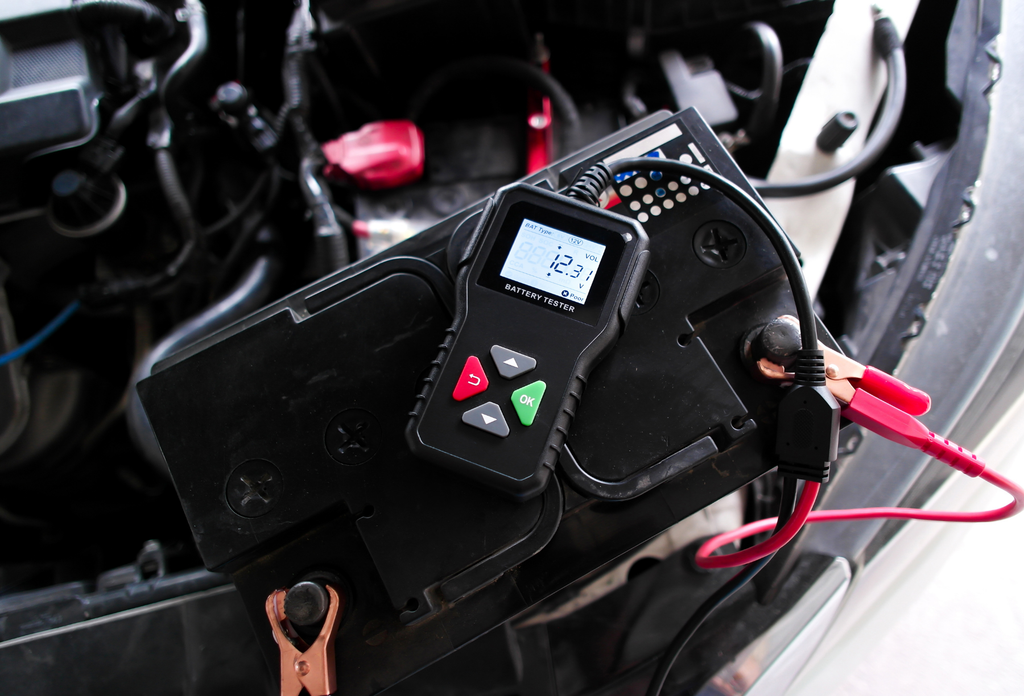
The distinction that matters is between a voltage check and a load test. A voltage reading tells you what the battery holds at rest, and a failing battery can read close to normal sitting still. A load test measures what it can deliver under the demand of actually starting, which is the only measurement that predicts a cold morning. Ask for the load test.
While the battery is being checked, the terminals and cable ends are worth a look. Corrosion at a connection creates resistance, and resistance in a starting circuit behaves a lot like a weak battery.
Coolant does two jobs, and one has nothing to do with heat
Most drivers think of antifreeze as the thing that keeps the engine from overheating in July. It also keeps the coolant in the block from freezing in January, and it carries the corrosion inhibitors that protect the radiator, water pump and heater core from the inside.
Those inhibitors deplete over time. Coolant that still looks fine can be chemically finished, which is why concentration and condition both get tested rather than eyeballed. The correct coolant type and mix ratio are specific to your vehicle. The manufacturer specifies both, and mixing incompatible types causes its own problems. This is not a place to top off with whatever is on the shelf in the garage.
Test the heat before you need it
A heater blowing cool air is a symptom, not a comfort problem. Depending on the vehicle it can point to low coolant, a thermostat stuck open, a plugged heater core or a blend door that has stopped moving. Each is a different repair, and a scan tool plus a few measurements will separate them.
Run the heat and the defrost on a cool morning now, on every setting, and pay attention to what the air actually does. A defroster that clears the windshield slowly is a safety item, not an inconvenience, and it is far easier to diagnose in October than during the first ice event.
Tires are the part of winter you can feel
Two separate things happen to tires when the temperature falls.
The first is pressure. Air contracts as it cools, and tire pressure drops with it — roughly one psi for every ten degrees Fahrenheit the ambient temperature falls. A tire set correctly on a 70-degree August afternoon can be four or five psi low on a 20-degree January morning without losing a molecule of air. Underinflation hurts handling, wears the outer edges of the tread and costs fuel. Check pressures against the placard in the driver’s door jamb, not the number molded into the sidewall, which is a maximum rather than a recommendation.
If your Tire Pressure Monitoring System (TPMS) light comes on during the first cold snap, that is usually what happened. It is still worth confirming rather than assuming, because the same light comes on for a slow leak.
The second is grip, and this is the part most drivers underestimate. Tread compounds stiffen as they get cold, and a stiffer compound has less mechanical grip. All-season rubber begins hardening below about 45°F — before there is any snow on the road at all. Winter tires use compounds formulated to stay flexible at those temperatures. Whether the trade is worth it depends on how and where you drive: a commute that includes an unplowed side street at 6am is a different problem from a run down Route 22.
Tread depth matters regardless of which type you run. So does rotation. Every 6,000 to 8,000 miles keeps wear even, and even wear is what keeps all four corners behaving the same way when you need them to.
Visibility is the least expensive safety work there is
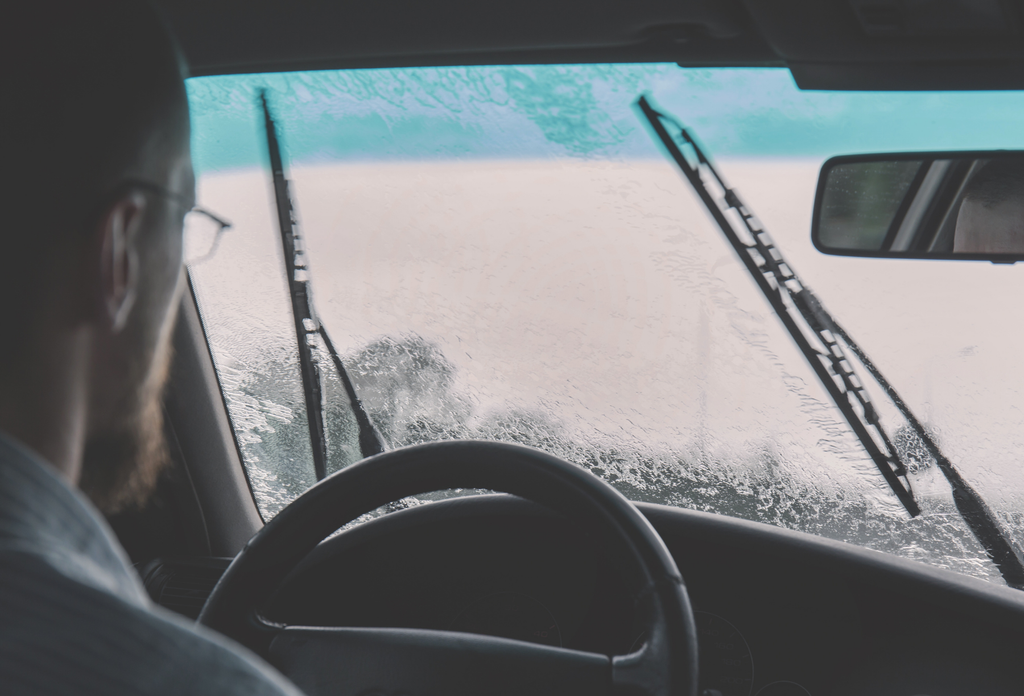
Wiper blades wear out quietly. The rubber hardens, the edge stops conforming to the glass, and the smearing you have been living with becomes genuinely dangerous the first time you drive into low winter sun on a wet road.
Washer fluid is the other half. Summer fluid can freeze in the reservoir and the lines, which leaves you with no way to clear salt spray at the moment you need it most. Winter-rated fluid solves it.
Check that every exterior light works while you are at it. Daylight gets short in November, and a burned-out bulb is both a safety issue and an easy inspection failure.
Road salt: what to watch underneath
Pennsylvania roads get salted, and salt accelerates corrosion on everything under the vehicle. The parts worth inspecting are the ones that matter functionally: brake lines, fuel lines, exhaust components and suspension hardware. Corrosion on a brake line is not a cosmetic issue, and it is the kind of thing found on a lift rather than in a driveway.
A look underneath before winter, and again in the spring, is reasonable practice for any vehicle that spends the season on treated roads.
While you are thinking about it: inspection
Lehigh and Northampton are two Pennsylvania counties that require emissions testing in addition to the annual safety inspection, and the two are normally done in the same visit. For 1996 and newer vehicles the emissions portion is an electronic check of the onboard diagnostic system plus a gas cap test.
The practical point for October: a check engine light that has been on for a while is an emissions failure waiting to happen, and the diagnosis takes longer than the inspection does. If your sticker is due over the winter and that light is on, it is worth separating those two visits rather than discovering the problem on the day.
What to actually do
The short version:
- Have the battery load tested, not just voltage checked.
- Have the coolant tested for both freeze protection and condition.
- Run the heat and defrost on every setting, and report anything odd.
- Set tire pressures to the door-jamb placard, and check tread depth.
- Replace worn wiper blades and switch to winter-rated washer fluid.
- Have the underside inspected for corrosion on brake and fuel lines.
- Check when your inspection is due, and deal with a check engine light before then.
Most of that is a single visit. None of it is urgent in October, which is precisely the argument for doing it in October.
Where we come in
Auto Motors of Lehigh Valley has kept vehicles on the road in Whitehall, Fullerton, Catasauqua, Allentown and the broader Lehigh Valley since 1992. We are a licensed Pennsylvania safety and emissions inspection station, and our technicians work on domestic and foreign vehicles, personal vehicles and commercial fleets alike.
Vehicle winterization is a good example of how we prefer to work. We will tell you what your vehicle actually needs before the cold sets in, in plain language, and we will tell you what can wait. Maintenance schedules are individualized here rather than pulled off a chart, because a vehicle with 40,000 highway miles and a vehicle with 40,000 stop-and-go miles are not the same vehicle.
We are at 615 Front St in Whitehall Township, two minutes from the Fullerton Exit off PA-22.
To schedule winterization service or routine vehicle maintenance, contact our team or call us at 610-266-9466. If tires are the piece you are least sure about, our tire installation, rotation, and repair page covers what we stock and what we can source, and we are happy to look at what you have before you spend anything.